Moroccan cuisine is the story of a nation shaped by centuries of history, trade, migration, and cultural exchange. Stretching from the Mediterranean coast in the north to the vast Sahara Desert in the south, Morocco has developed one of the most diverse and fascinating culinary traditions in the world.
Every Moroccan dish carries a story. Behind every tagine, every loaf of bread, every glass of mint tea, and every plate of couscous lies a rich heritage passed down from generation to generation.
The roots of Moroccan cuisine begin with the Amazigh (Berber) people, the indigenous inhabitants of North Africa. For thousands of years, Amazigh communities cultivated grains, raised livestock, harvested olives, and developed traditional cooking methods that still influence Moroccan food today.
Over the centuries, Morocco welcomed many civilizations. Arab influences introduced new spices, ingredients, and culinary techniques. Andalusian families arriving from Spain brought refined recipes, pastries, and sophisticated cooking traditions. Jewish communities contributed unique preservation methods, festive dishes, and culinary customs. Trade routes connecting Morocco to Sub-Saharan Africa introduced exotic spices, while Mediterranean exchanges enriched local cuisine with fruits, vegetables, and seafood.
This remarkable blend of cultures transformed Moroccan cuisine into a culinary treasure unlike any other.
From the fertile plains of the north to the Atlas Mountains, from the Atlantic coast to the golden dunes of the Sahara, every region of Morocco has developed its own specialties.
In northern Morocco, dishes often reflect Mediterranean and Andalusian influences, featuring olive oil, seafood, fresh herbs, and aromatic spices.
In the imperial cities of Fez, Meknes, Marrakech, and Rabat, centuries of royal and aristocratic traditions created sophisticated recipes that balance sweet and savory flavors in unique ways.
In the Atlas Mountains, traditional Amazigh cooking celebrates simple ingredients transformed into nourishing meals such as tagines, breads, and grain-based dishes prepared using methods passed down for generations.
Along the Atlantic coast, seafood plays a central role, with fresh fish, shellfish, and ocean-inspired recipes forming an essential part of local cuisine.
In southern Morocco and the Sahara regions, desert communities developed resilient culinary traditions adapted to harsh climates, creating dishes rich in flavor, hospitality, and cultural significance.
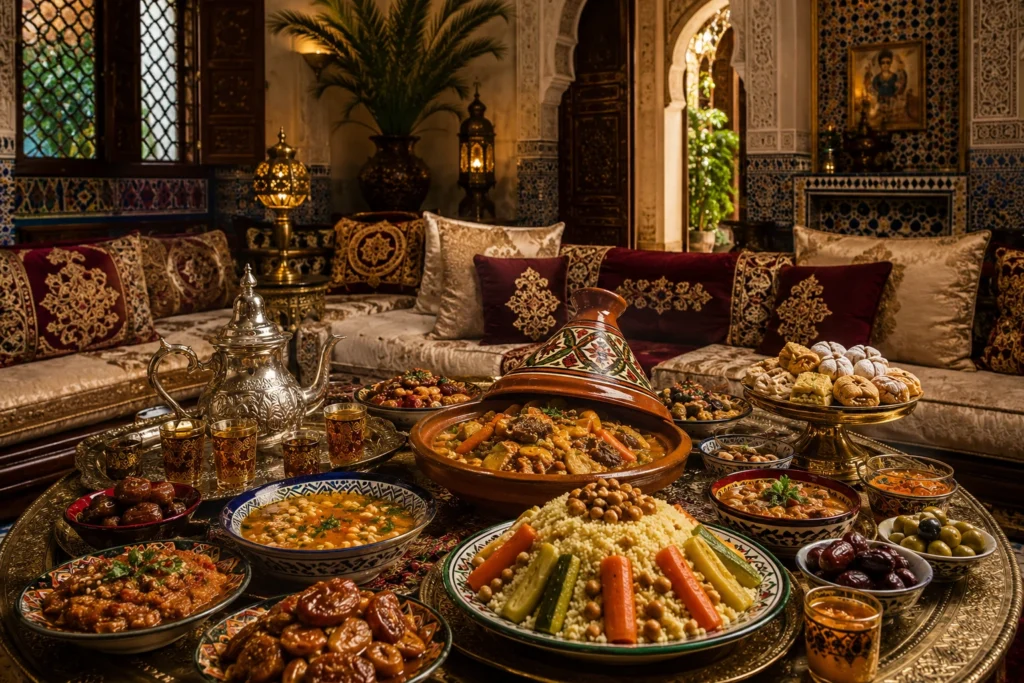
At the heart of Moroccan cuisine stands couscous, often considered the national dish of Morocco. For centuries, families have gathered around couscous every Friday, turning a meal into a moment of family, gratitude, and togetherness.
Another symbol of Moroccan gastronomy is the tagine, a slow-cooked dish named after the traditional clay vessel used in its preparation. Tagines reflect the Moroccan mastery of combining spices, meats, vegetables, fruits, and herbs into harmonious flavors.
No story of Moroccan cuisine would be complete without Moroccan mint tea. More than a beverage, tea represents hospitality, friendship, generosity, and social connection. Serving tea is one of Morocco’s most cherished traditions.
Food also plays a central role in Moroccan celebrations. Weddings, religious holidays, family gatherings, births, and festive occasions all feature special dishes prepared according to long-standing customs and regional traditions.
The mission of Hala Recipes is not only to share authentic Moroccan recipes but also to preserve the stories behind them. We explore the origins of traditional dishes, the meanings of their names, the regions where they were born, and the celebrations where they are served.
Through every recipe, we invite you to discover Morocco’s history, culture, hospitality, and culinary heritage.
Welcome to the extraordinary world of Moroccan cuisine.